
赌神
GT Voice: Chinese investment could help Germany stabilize its talent base_我的网站

A | 讯 8月26日,国务院新闻办公室举行“开局起步‘十五五’”系列主题新闻发布会,介绍全力抓好“十五五”规划实施,加快推进新型工业化有关情况。
Germany's industrial woes have increasingly become a hot topic of discussion. The latest Engineer Monitor report from professional association Verein Deutscher Ingenieure and the German Economic Institute offers a new look at the issue.
The report showed that there were 58,392 unemployed individuals in the engineering and information technology (IT) professions in the fourth quarter of 2025, the highest level since the survey began in 2011.
Compared with the previous year, the number of unemployed increased by 16.7 percent, according to German media reports on Sunday.
These figures lay bare the challenges confronting the country's manufacturing sector. The reasons for the industrial woes are multiple. The soaring energy costs caused by geopolitical conflicts, the decline in exports caused by rising protectionism and low external demand, and the structural pain caused by industrial chain restructuring are all squeezing the space of German manufacturing.
Manufacturing is the backbone of Germany's economy, and engineers and IT specialists constitute the core force that sustains this pillar. For decades, the country's reputation for "Made in Germany" excellence was built on the expertise of these skilled professionals. Regardless of the macroeconomic ups and downs, preserving the stability and continuity of its industrial talent pool represents a strategic bottom line for Germany.
Should large numbers of highly skilled technical professionals leave the industry or sit idle, industrial research and development (R&D) and production cycles will be disrupted. Over the longer term, such a waste of human capital will erode Germany's industrial innovation capacity and, ultimately, undermine the foundations of its global competitiveness.
In this context, the urgent task for Germany is to create sufficient quality positions for its technical talent. Should it fail to do so in the short term, then Germany needs to embrace a more open‑minded development approach. Shoring up its manufacturing base cannot be achieved solely through protecting domestic companies; it also requires a significant expansion of effective investment to create enough high‑quality jobs that can attract and retain skilled talent.
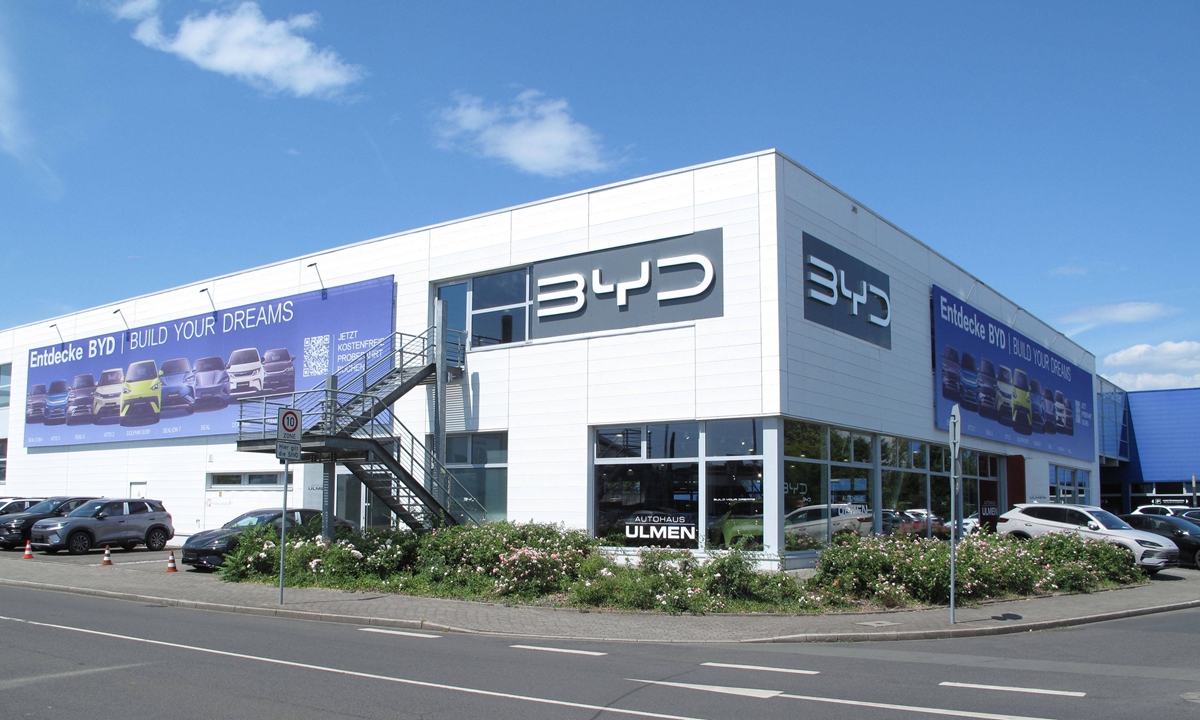
This is exactly where China‑Germany cooperation could deliver tangible results. According to the FDI Report 2025 published by Germany Trade & Invest (GTAI), the total number of foreign investment projects in Germany fell 9.3 percent overall to 1,564 in 2025. Nonetheless, Chinese companies became the largest source of foreign investment projects in Germany in 2025, overtaking the US for the first time since 2017.
Chinese companies launched 228 investment projects in Germany in 2025, up 14.6 percent year-on-year. More than one in five Chinese investment projects involved production and R&D activities, above the overall average for foreign investment projects in Germany. This is a sign that Chinese firms are deepening their integration into the local industrial base, according to GTAI.
Observers noted the trend, pointing out that China is becoming an important force in driving German re‑industrialization. In industries where Germany urgently needs to rebuild its competitive edge, such as electric vehicles, batteries, energy technology, digital manufacturing, and automation, China is emerging as an increasingly significant complementary partner. In these critical areas that will determine industrial competitiveness in the coming decades, the relationship between China and Germany is not merely one of rivalry; there are clear and substantial complementarities. Germany still boasts world‑leading engineering expertise, precision manufacturing capabilities, and a strategic location at the heart of the European market.
China has complete and highly integrated supply chains for raw materials and intermediate goods and large capacity for increasing production. When Chinese automakers set up R&D centers in Germany, or when Chinese tech firms collaborate with German factories to build smart production lines, the beneficiaries are not only the Chinese companies but also the German engineers who would otherwise face redundancy.
Cross‑border investment cannot flourish without a sound policy environment. Chinese companies are apparently willing to develop in Germany, but it can only happen on the premise that the German side provides a fair, reasonable and predictable business environment, reduces non-market interference in commercial activities, and allows capital to operate in accordance with market rules.
If the two countries are able to reach a deeper level of cooperation in investment, many of Germany's trade‑related concerns may well find more pragmatic solutions. The deep integration of industrial value chains would facilitate two‑way trade, creating renewed momentum for German exports of machinery, vehicles, chemicals, and other competitive products to China.
。 工业和信息化部副部长辛国斌在会上介绍,“十五五”时期,将坚持应用牵引,带动人工智能技术创新和产业发展,协同深化生态建设、安全治理和开放合作,推动“人工智能+制造”加出新速度、新高度、新成效。 供给方面,重在筑牢技术底座。

B | 将支持研发高端训练芯片、多模态算法等关键技术,攻关类脑智能、世界模型等前沿技术,推进人形机器人、脑机接口等智能终端迭代,发展智能矿山机械、农业机械、智能医疗器械等产品,更好地满足各行各业需要。 应用方面,重在挖掘落地场景。分行业凝练高价值场景,探索“一业一图谱、一景一档案”的场景培育新模式。

C | 将实施应用服务商的培育专项行动,将制造业多年积淀的“老经验”挖掘好、梳理好,在此基础上推出一批轻量化、低成本、易部署的行业解决方案,让企业真正用得上、用得起、用得好。 生态方面,重在优化发展环境。将以高水平人工智能开源社区为载体,打造一批“人工智能+制造”优质开源项目。推动人工智能基金汇聚金融“活水”,加大投资力度。分级分类推动基础共性、赋能应用、安全伦理等方面标准的研制和应用。 安全方面,重在有效化解风险。开展人工智能安全风险监测、信息共享及通报处置,建好用好人工智能产品安全漏洞库。

D | 持续推进深度合成检测、模型算法安全防护、价值对齐等技术攻关,让人工智能真正为人所用、为人所控。版权申明:凡注有“”或电头为“”的稿件,均为独家版权所有,未经许可不得转载或镜像;授权转载必须注明来源为“”,并保留“”的电头。 。
Current article:http://r7r.ruwentaqintiaozhupapaigai.shop/yzer4vc/uhj.html
Published on:19:43:03
上一篇:纺织鞋服“百企千品强链对接”活动首次出省 下一篇:Photo: Motorcade of Kamala Harris' Husband Blocks Handicapped Parking Spots During His Shopping Run
我的网站相关阅读
- Rep. Jim Jordan 'turned a blind eye' to sex abuse allegations, says former OSU wrestler amid House speaker battle
- 3个核心第一次同框合练!41岁詹姆斯已经开练,76人最难一课却不是战术
- 小米官方旗舰店,虚假标注
- 三星推出了一项针对手机的集中换屏服务:仅以较低的成本更换屏幕的主要组件
- "독도는 대한민국 고유 영토" 경북도의회, 독도수호특위 본격 가동
- 中国男女足赴日备战
- Shanghai pilots AI-powered weight management program for children
- 越讨厌越要看!当代体育迷爱上「批评式观赛」
- 部分用户反馈 Spotify 音乐 App 在 Android Auto 上出现 Bug,提示“应用未响应”
我的网站最新文章
- 华为NOA 3/Glory 10主要功能更新:骨骼语音识别支付
- 618从6月17日20:00开始持续至6月18日24:00的28小时内买手机最便宜
- 진보당, '이진숙 제명촉구안' 표결 불참 국힘에 "전두환 정당 해체하라"
- Dhurandhar Box Office Day 3: Ranveer Singh's Film Crossed Rs 100 Crore Mark
- 最高温33℃!河北大部地区有雷雨,局地中到大雨,最新出行信息→
- 一加预热海外新机N6x:直角边框配胶囊形相机模组
- 土以关系升温或难持久
- 女武神決心送天空三連敗
- 梅德韦杰夫:斯图布是十足的蠢货,他一点都没变,还是那个智商,云鹤说史,原创 梅德韦杰夫:斯图布是十足的蠢货,他一点都没变,还是那个智商
- Japanese yen touches 32-year low
- 牛车水中秋节灯饰本周五亮相 最大型的灯笼高达八米
- 西湖区文新街道探索落地邻里互助专属保险
- Shenzhen Customs signs first sister-port cooperation MOU with Chile
我的网站随机推荐
- 巳巳如意 ,“幼”见可爱的你
- Redmi Red Rice注7:下一代Chin靠近iPhone X
- 新年首月道路死亡人数创记录,考驾照要加大难度?
- 【成长园—体验】蛇来运转 巳巳如意—沈北新区道义二小幼教集团年俗系列活动(四)
- US Navy destroyer in Red Sea shoots down cruise missiles potentially headed toward Israel: Pentagon
- 济南新学期周历发布!秋季开学时间为9月1日,2027年寒假、暑假时间也明确了
- 雷神推出猎刃 60 游戏手柄:8KHz 回报率、可调力 TMR 摇杆,399 元
- 谈崩了!住院医生5月初罢工,病人请改天生病......
- 转型两年盈利迎来修复,安德玛好起来了?
- ‘Why Isn’t MAGA Inc. Funding Everyone’s Defense?’
- 淘宝京东618活动什么时候开始买最便宜,2025年淘宝京东618活动从5月31日20点开始持续到6月20日结束!
- 英菲尼迪纯电动SUV将展出,真正的汽车和内饰将提前在星空图书馆曝光。
- 용산공원·서울 그린벨트, 7만3000가구 추가 공공택지서 빠진다…"경기 중심 유력"